
Published: Friday October 2, 2009 MYT 12:26:00 PM
Updated: Friday October 2, 2009 MYT 2:35:34 PM
IDF 09: More speed on the go
TOUCH THIS: Perlmutter shows off a new prototype platform, Tangent Bay, the first multitouch, multiscreen notebook. - Intel SAN FRANCISCO: Intel’s key architecture improvements for processors usually happen at the server and desktop levels before trickling down to notebooks.
But this year was different as the chipmaker unveiled the Core i7 mobile processor (formerly codenamed Clarksfield) at IDF 2009, which will be the first to feature Turbo Boost.
Turbo Boost allows the processor to selectively shutdown cores to boost the speed of the remaining ones in order to deliver pure processing power without increasing the power consumption.
“It’s a 2GHz chip, but with Turbo Boost it can go up to 3.2GHz,” said Mooly Eden, vice-president and general manager of Intel’s PC client group.
“The Clarksfield is the best quad-core, dual-core, and single-core microprocessor, because we always take the extra headroom and move it to the cores.” The quad-core chips will be available in two flavours for the standard edition, and only one for the Extreme edition.
The standard edition Core i7-820QM will run at a speed of 1.73GHz (up to 3.06GHz with Turbo Boost) and the Core i7-720QM has a speed of 1.60GHz (up to 3.28GHz with Turbo Boost).
The Extreme edition i7-920XM has a speed of 2GHz but when Turbo boost kicks in it can go all the way up to 3.20GHz, which is an incredible 1.2GHz increase.
Power packed
Meanwhile, Intel is still going full steam ahead with its “tick-tock” model for mapping out the future of its processors.
With the tick-tock model, the chipmaker improves its manufacturing process to pack more transistors into its processor to increase performance and improve energy efficiency on the first year, and revamping the architecture completely on the next.
As it is still in the first phase this year, Intel is planning to release an improved Core architecture, codenamed Westmere, said Intel architecture group’s executive vice-president and general manager Sean Maloney.
Westmere is the first chip manufactured using 32nm process — previous chips used 45nm — which has allowed Intel to pack new features such Advanced Encryption Standard (AES) for faster encryption and decryption of data.
The icing on the cake is that it will also be Intel’s first processor to integrate CPU and graphics core into the same chip.
“Why would you put two of these together? It’s all about managing the thermal energy,” said Dadi Perlmutter, executive vice-president of Intel’s mobility group.
“Imagine doing Turbo between the CPU and the graphics core, so you could alternatively operate each core at full steam. This is going to allow us to get the best of the graphics and CPU performance.”
New challenger
Intel’s push into the graphics domain, currently dominated by nVidia and AMD (through the acquisition of ATI), will only begin when the release of its Larrabee architecture, the company’s graphics-centric co-processors.
The Larrabee silicon will also eventually be built into the chip but its first appearance will be as a discrete graphics card.
Larrabee looked good when it was paired with Intel’s next-generation Gulftown gaming processor (six cores, 12 threads, 32nm) — Maloney demonstrated a real-time ray-traced version of Id’s Quake Wars: Enemy Territory.
Maloney claims that Larrabee will have all the traditional strengths of Intel Architecture (IA), mainly ease of programming and the power of parallel processing.
The unique feature of Larrabee is its fully programmable rendering pipeline, which allows programmers to add effects like voxel rendering and ray tracing with just a few lines of code as opposed to a few hundred.
One PC, one wire
In terms of connectivity, the past few years the focus has been on wireless technology but there is still a place for wires simply because they still offer the best speed and stability.
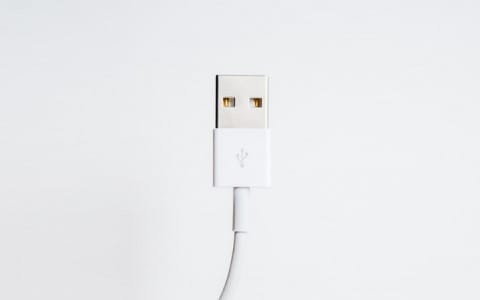
The good news is that in the future we will only need one wire for the PC. Intel calls it Light Peak as it is an optical wire, and it will have a speed of 10Gbps (gigabits per second) for up to a distance of 100m.
It will support multiple devices from high-definition displays, LAN, storage and more in just one slim cable.
“We’ll have the components for Light Peak next year, but it’s going to be a long-term transition,” said Perlmutter.
A flexible OS
Intel is excited about Microsoft’s upcoming Windows 7 operating system because it is expected to spur PC sales, but it’s even more excited about it’s own OS, Mobilin 2.1.
The open-source operating system based on Linux is meant for devices such as smartphones, netbooks and MIDs (mobile Internet devices).
The latest version previewed at IDF is even more versatile as there are specific editions for devices such as handhelds, netbooks and nettops.
Even as it becomes available for more devices, software developers don’t have to worry about creating different versions for the various devices.
Intel said its software development kit will allow designers to create a single application that will work on all the devices running Moblin, be it small or big.
Moblin, which is designed to run on Atom processors, also supports Flash and Silverlight 3, so users can take advantage of Web apps.